One of the world’s oldest organic organisations is now using crowdfunding to help keep New Zealand’s valuable GE-free status.
The Soil & Health Association of New Zealand, founded in 1941, has just launched a Givealittle page to appeal for donations from a wide range of Kiwis who want a clean, green, GE-free Aotearoa.
Recently, Soil & Health has been defending the rights of councils to control the use of genetically modified organisms (GMOs) in their regions under the Resource Management Act.
Soil & Health’s new Givealittle page will help Kiwis contribute towards the costs involved in the High Court case held in Whangarei in February 2016. Soil & Health joined with others in the High Courtto protect Northland Regional Council’s ability to decide whether or not GMOs are released or field-trialled in Northland and, if so, whether any conditions should be placed on them. Soil & Health anticipates similar court cases in the future, so is also seeking funds now in preparation for these.
https://soilandhealth.org.nz/wp-content/uploads/2024/09/Soil-and-Health-Association_logoFA-web2024.jpg00editorhttps://soilandhealth.org.nz/wp-content/uploads/2024/09/Soil-and-Health-Association_logoFA-web2024.jpgeditor2016-04-20 08:01:232016-04-20 08:01:23Together we can keep Aotearoa GE-free!
Cutting an organic cake at Parliament today marked the 75th anniversary of the Soil & Health Association, one of the world’s oldest organic organisations. The cake ceremony was a highlight of the launch of the OANZ 2016 New Zealand Organic Market Report.
“We’re so proud to be part of a movement that is championing healthy soil, healthy food and healthy people,” said Marion Thomson, co-chair of Soil & Health.
According to the Organic Market Report, two out of every three Kiwis are buying organic products. The organic sector in New Zealand has grown by 11% per annum every year since 2012, being driven by consumer demand, which is outstripping supply. Organic grocery sales through supermarkets have increased by 127% since 2012.
“More and more people are looking for organic food, which gives assurance that it is safe, healthy, environmentally conscious and GE-free,” said Marion Thomson.
“The report is a powerful validation of the growing strength of organics when it comes to Soil & Health’s legal cases, as we defend the rights of communities via their councils to retain the right to be GE-free, or determine the use of any outdoor GMOs in their areas,” she said.
The Soil & Health Association has, since it was founded in 1941, promoted organic gardening and farming methods, healthy food and good nutrition. It is the largest organic membership organisation in New Zealand, and publishes Organic NZ magazine.
https://soilandhealth.org.nz/wp-content/uploads/2024/09/Soil-and-Health-Association_logoFA-web2024.jpg00editorhttps://soilandhealth.org.nz/wp-content/uploads/2024/09/Soil-and-Health-Association_logoFA-web2024.jpgeditor2016-04-08 08:04:592016-04-08 08:04:59Celebrating 75 years of organics in NZ
Pressure from the biotech industry for the government to relax laws on genetic engineering will result in a new wave of GE-free activism, the Soil & Health Association predicts.
This follows comments from some GE companies, and from the Treasury Secretary Gabriel Makhlouf in a speech at Fieldays that New Zealand is missing out on opportunities.
“Kiwis have fought hard to keep our environment GE-free, but if that is threatened, we will see massive protests,” says Marion Thomson, co-chair of Soil & Health. “GE farming and/or forestry will jeopardise our clean, green brand.”
Relaxing the Hazardous Substances and New Organisms (HSNO) Act would be absolutely detrimental to our environment, our economy and to our communities. Experiences overseas have shown that GE crops have led to the rise of herbicide-tolerant ‘superweeds’, and the use of more and stronger pesticides. GE yields are no greater. In the USA and Europe, pig farmers using GE stock feed are seeing health problems and deformities in piglets, and finding that the pigs cannot breed; instead of a fetus there is just a sac of water.
“The trouble is that genetic engineering is inherently risky. Scientists cannot control where inserted genetic material ends up in the DNA,” says Thomson. “This can lead to unexpected outcomes. For example, many people are allergic to the pine pollen that is widespread around New Zealand, but imagine if GE pine pollen turned out to be even more allergenic, or even toxic?”
“Millions of taxpayer dollars have already been spent on GE field trials, with no positive results to date,” says Thomson. “Rather than go down the GE road, New Zealand has a great opportunity to keep our point of difference. Let’s ensure that we live up to our clean, green image and shift towards high-value, environmentally sustainable, GE-free organic farming and forestry. This is what markets around the world are crying out for.”
“Proposed changes to the Resource Management Act, announced last week by Environment Minister Amy Adams, could result in ratepayers picking up the tab for industry damaging our environment. This is highly immoral and undemocratic,” says Debbie Swanwick, Spokesperson, Soil & Health – Organic NZ.
Councils have a responsibility to ensure that ratepayers are protected against risk and liability.
“Removing this ability undermines local bodies and makes central government all powerful,” says Swanwick.
The proposed changes to Part 2 of the RMA lower environmental standards. The Resource Management Act is both a planning tool and an environmental protection mechanism.
“The reforms provide a pathway for the former compromising the later,” says Swanwick.
It has been suggested that an application for the release of GE ryegrass in New Zealand may be filed this year.
“This is of most concern with regard to the RMA reforms as the Hazardous Substances and New Organisms (HSNO) Act requires neither a bond to be paid nor compensation for immediate or future loss to the social, economical, environmental or cultural wellbeing of our communities as a result of GMOs. Should the RMA proposals become law, alongside a weak HSNO Act, ratepayers will be left to pay for what should be the responsibility of industry,” says Swanwick.
Soil & Health is one of the oldest organic organisations in the world and advocates for the consumer’s right to have fresh, healthy, organic food and water free of GE, pesticides and additives and their right to know what is in their food and water. Oranga nuku, oranga kai, oranga tangata. To learn more about what is really in your food subscribe to their Facebook Page http://www.facebook.com/OrganicNZ
https://soilandhealth.org.nz/wp-content/uploads/2024/09/Soil-and-Health-Association_logoFA-web2024.jpg00editorhttps://soilandhealth.org.nz/wp-content/uploads/2024/09/Soil-and-Health-Association_logoFA-web2024.jpgeditor2013-08-13 05:43:132013-08-13 05:43:13RMA reforms undermine communities and the environment
“Europe’s decision to ban neonicotinoids was a good day for bees. We need to follow this lead and ban systemic pesticides that are killing our bees,” says Debbie Swanwick, Spokesperson, Soil & Health – Organic NZ.
In April 2013 Europe placed a two-year ban on three neonicotinoids – a systemic pesticide that permeates every cell of a plant and makes it poisonous. Birds, earthworms and other wildlife are thought to be affected too.
This class of pesticide is not limited to agricultural and farm use but is also found in many pesticide products used in the home and by pest professionals.
“Humanity is hugely dependent on bees for our food, and we poison them at our peril,” says Swanwick. “We urgently need to switch to sustainable, organic farming methods that are kind to bees, to us, and to the whole ecosystem.”
Bees pollinate 75% of food crops, and in New Zealand 430,000 hives contribute $5 billion to the economy from crop and clover production.
The United Nations Environment Program released a report in 2011 indicating a “sixth major extinction” of biological diversity is currently underway, caused by habitat loss, pollution, pest invasion, and disease, leading to ecosystem havoc.
“Bee populations are in decline worldwide. In the UK alone honeybee populations have halved in the past twenty five years. This could take us on a journey to a destination we never thought possible and one worthy of a Darwin award. The harsh reality is that humans may be responsible for our own extinction because we didn’t fight hard enough for our survival,” says Swanwick.
Consumers can avoid GE, pesticides and additives in their food by buying certified organic produce. In New Zealand that is labelled as BioGro, AsureQuality, OrganicFarmNZ and Demeter.
Soil & Health is one of the oldest organic organisations in the world and advocates for the consumer’s right to have fresh, healthy, organic food and water free of GE, pesticides and additives and their right to know what is in their food and water. Oranga nuku, oranga kai, oranga tangata. To learn more about what is really in your food subscribe to their Facebook Page and subscribe http://www.facebook.com/OrganicNZ
https://soilandhealth.org.nz/wp-content/uploads/2024/09/Soil-and-Health-Association_logoFA-web2024.jpg00editorhttps://soilandhealth.org.nz/wp-content/uploads/2024/09/Soil-and-Health-Association_logoFA-web2024.jpgeditor2013-07-15 10:08:012013-07-15 10:08:01Saving the bees means saving ourselves
“The announcement by Environment Minister Amy Adams that she will legislate so that local councils cannot protect their ratepayers against the risks of genetically engineered organisms is a direct attack on democracy in this country,” says Debbie Swanwick, Spokesperson, Soil & Health – Organic NZ.
The Hazardous Substances and New Organisms Act does not protect the public against liability from any adverse consequences of GE. Local councils are responsible for communities’ environmental, social, cultural, and economic well-being. They can provide an additional layer of protection for ratepayers, such as restricting or banning the use of GMOs in the environment or requiring users to pay a bond.
“Every taxpayer in this country has already paid $8000 from their back pocket to sort out the leaky building fiasco, from which they were not protected. Central government is now suggesting they put themselves on the line again to protect corporate interests,” says Swanwick.
“Soil & Health supports the right of councils to determine their own policies on GE, in consultation with their communities. Several councils around New Zealand either have or are looking at policies to restrict the use of GMOs, in response to the concerns of ratepayers, including farmers and consumers.”
There has been discussion of a commercial GMO release next year which is pressing this issue. In poll after poll, a majority of New Zealanders have declared they do not want GE in their food or environment. A 2009 Colmar Brunton poll found that 73% of ratepayers in the region stretching from Cape Reinga to South Auckland did not want GMOs due to lack of knowledge and lack of research and information about the rising dangers of genetic engineering.
“It is unacceptable and anti-democratic for Minister Adams to say that the central government will take away the right of local governments to represent their ratepayers’ best interests. This threat to undermine local government suggests that an elite few (whether politicians or corporations) are controlling and not listening to the people,” says Swanwick.
Soil & Health is one of the oldest organic organisations in the world and advocates for the consumer’s right to have fresh, healthy, organic food and water free of GE, pesticides and additives and their right to know what is in their food and water. Oranga nuku, oranga kai, oranga tangata. To learn more about what is really in your food subscribe to their Facebook Page and subscribe http://www.facebook.com/OrganicNZ
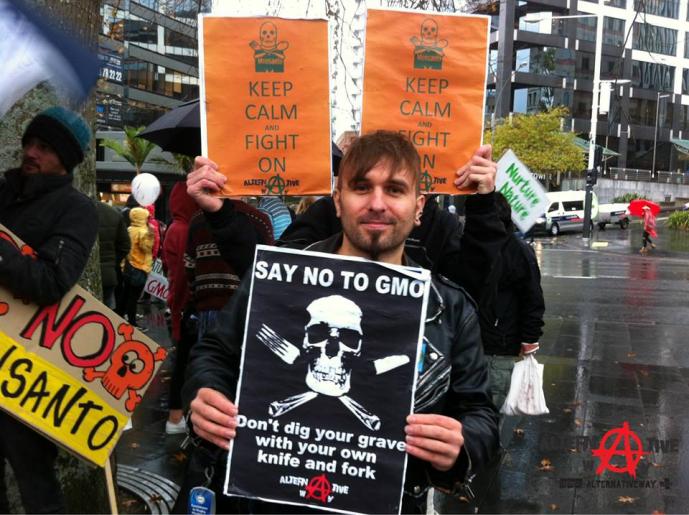
Photo caption: Protestors at one of the many “Marches against Monsanto” held throughout NZ in May
“The increase in food co-operatives in New Zealand is enabling communities to take back control of their food supply, improve relationships between community members and achieve better health outcomes” says Debbie Swanwick, Spokesperson, Soil & Health – Organic NZ. Food co-operatives provide better quality food, mostly organic, at a cheaper price. “Stories of the average New Zealanders’ desire to remove contaminants in their food (GE, pesticides and additives) by establishing an organic food co-operative in their region will feed the next generation well. New Zealanders seem to have picked up on this worldwide trend at a great rate” says Swanwick. Franklin’s recent success with The FROOB LTD (The Franklin based Real and Organic Organised Buyers co-operative) is a testament to the effectiveness of the societal model that is growing local economies. Franklin is one of Auckland’s largest food bowls that grows most of New Zealand’s onions, potatoes and green vegetable crops. The Froob is dedicated to buying organic produce, preferably locally grown, that is Fair Trade at a price slightly higher than wholesale and re-selling it to their 300 members at a less than retail price. It is forecast that their turnover this year will exceed a million dollars. “The impact of this on the local economy is huge” says Debbie. Backyard growers are also encouraged to sell their excess produce to the co-op which is encouraging the development of gardens in the region. Debbie Swanwick will be speaking at the Green Living Show, ASB Showgrounds Greenlane West on Saturday 29 June at 3pm. The subject will be ‘How New Zealand Communities are taking back control of their food supply’ and she will discuss how you can establish a food co-operative in your region. The board of The Froob will be available to answer questions. Soil & Health – Organic NZ is one of the oldest organic organisations in the world and advocates for the consumer’s right to have fresh, healthy, organic food and water free of GE, pesticides and additives and their right to know what is in their food and water. Oranga nuku, oranga kai oranga tangata. To learn more about what is really in your food subscribe to their Facebook Page and subscribe http://www.facebook.com/OrganicNZ References 1) http://www.growtogether.org.nz/community-gardens-and-other-projects/food… 2) http://www.stuff.co.nz/taranaki-daily-news/features/your-world/7910705/B… 3) http://good.net.nz/magazine/7/features/good-food-no-worries 4) www.thefroob.co.nz
https://soilandhealth.org.nz/wp-content/uploads/2024/09/Soil-and-Health-Association_logoFA-web2024.jpg00editorhttps://soilandhealth.org.nz/wp-content/uploads/2024/09/Soil-and-Health-Association_logoFA-web2024.jpgeditor2013-05-31 05:24:012024-12-20 14:52:27Food co-operatives in NZ on the rise
New Zealand was one of 52 countries around the world that protested on Saturday against genetically modified food that big agritech giant Monsanto produces. The worldwide “March against Monsanto” is the first global protest against genetically modified food. “The level of participation in New Zealand in these marches is evidence that New Zealanders want what we offer – real food for real people,” says Debbie Swanwick, Spokesperson, Soil & Health – Organic NZ. Thousands of concerned citizens marched in Whangarei, Auckland, Tauranga, Rotorua, Wellington, New Plymouth, Nelson, Christchurch and Dunedin. “GE is but one issue that compromises the nutritional value and goodness of real food – pesticides and additives are others. In addition to protests consumers are voting with their wallets” says Swanwick. “Last year organic sales in New Zealand increased 8% and between 2007 and 2012 the total land area in New Zealand under organic certification increased by 67%.” Genetically engineered plants are designed to resist insecticides and herbicides and it is suggested they increase yields but the 2009 Failure to Yield report by the the Union of Concerned Scientists proves they do not. They are also producing super weeds and super insects who have developed a tolerance and increasing the use of dangerous chemicals. Between 1996 and 2008, US farmers sprayed an extra 383 million pounds of herbicide on GMOs. Last year 80% of American corn was also compromised when the BT rootworm, that attacks it, developed a tolerance to the insecticide. “GE crops always cross contaminate. Having only one crop is agricultural suicide if it fails, as America experienced last year with their BT corn crops, and US farmers have learnt from that experience. Many are choosing not to replant this year, but by far the greatest danger of GE crops is the threat they pose to human health,” says Swanwick. “People need nutrients in their food, not chemicals,” says Swanwick “and it is long overdue that we took a stand against companies that breach our code of human ethics. If your policy is to compromise the food that we feed our children our policy is to compromise your profits by buying organic. Thankfully New Zealanders have never been afraid to speak their truth in that way. We made world history when we declared ourselves nuclear-free and yet again, we are setting the benchmark for the rest of the world who already admire us for our clean, green image,” says Swanwick. No GE crops are grown commercially in New Zealand. Soil & Health – Organic NZ is one of the oldest organic organisations in the world and advocates for the consumer’s right to have fresh, healthy, organic food and water free of GE, pesticides and additives and their right to know what is in their food and water. Oranga nuku, oranga kai oranga tangata. To learn more about what is really in your food subscribe to their Facebook Page and subscribe http://www.facebook.com/OrganicNZ
https://soilandhealth.org.nz/wp-content/uploads/2013/05/monsanto-march-2.jpg515689editorhttps://soilandhealth.org.nz/wp-content/uploads/2024/09/Soil-and-Health-Association_logoFA-web2024.jpgeditor2013-05-27 05:27:502024-09-19 13:18:20New Zealanders protest for better food for world citizens
A toxic heavy metal we have been putting on our farms for decades could jeopardise our agricultural exports and our health. The Soil & Health Association is calling for maximum residue levels of cadmium in fertilisers.
“Sooner or later our export markets will start rejecting our dairy products because of unsafe levels of cadmium,” says Debbie Swanwick, spokesperson for Soil & Health – Organic NZ.
“Furthermore, the health of Kiwis will get worse and our public health bill will increase unless we switch to organic and more sustainable farming methods.”
Two million tonnes of superphosphate fertiliser containing 30 to 40 tonnes of the heavy metal cadmium is put on New Zealand soils every year. Standard farming practice over the past 70 years has involved the use of superphosphate, especially in dairy farming, which has resulted in dangerously high levels of cadmium in our soils and consequently our food.
In the Waikato for example, 160,000 hectares should now be officially labelled as contaminated were it not for the fact that changes to legislation in 2012 removed agricultural land from any contamination classification.
Cadmium accumulates in the kidneys and liver, and is linked with breast and testicular cancer. Kidneys from sheep older than two and a half years are not permitted for human consumption because of the cadmium levels, but may be used as offal in products such as blood and bone to be used in home or market gardens or in pet food.
“Your children and family pet may be paying the ultimate price for New Zealand’s desire to continually increase farming productivity” says Swanwick. “Cadmium levels in NZ soils are far higher than what is allowed under European standards. Levels here are what Europeans would deem dangerous for children,” says Debbie Swanwick, Spokesperson, Soil & Health – Organic NZ.
Organic farms don’t use superphosphate, but often use reactive phosphate rock (RPR), which also contains cadmium, albeit in lower levels than superphosphate. There are chemical methods to reduce cadmium levels but they also reduce the effectiveness of the RPR. Researchers are trialling various bacteria and plants to clean up or accumulate cadmium and remove it from soil. But the most effective measure that must be taken as soon as possible is to introduce maximum residue levels, as other countries have done.
“It is imperative that regulations are introduced to reduce cadmium inputs on our farms in order to remove dangers posed to human and animal health, the threat to our export markets and to ensure that land values do not drop if land is no longer viable because of cadmium contamination” says Swanwick.
Soil & Health is one of the oldest organic organisations in the world and advocates for the consumer’s right to have fresh, healthy, organic food and water free of GE, pesticides and additives and their right to know what is in their food and water. Oranga nuku, oranga kai, oranga tangata. To learn more about what is really in your food subscribe to their Facebook Pagehttp://www.facebook.com/OrganicNZ
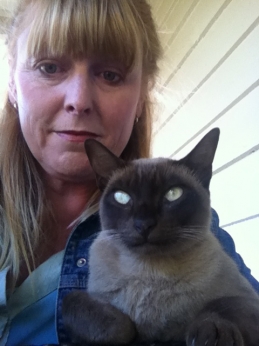
“The high incidence of renal failure, especially in cats, suggests that cadmium may to be blame,” says Debbie Swanwick, Spokesperson, Soil & Health – Organic NZ featured with her Chocolate Burmese cat Bailey.
https://soilandhealth.org.nz/wp-content/uploads/2024/09/Soil-and-Health-Association_logoFA-web2024.jpg00editorhttps://soilandhealth.org.nz/wp-content/uploads/2024/09/Soil-and-Health-Association_logoFA-web2024.jpgeditor2013-05-08 05:30:262025-03-09 20:25:21Toxic time bomb could blow apart our health and wealth
In New Zealand ‘certified’ organic food is the best labelling system available for the consumer,” says Debbie Swanwick, spokesperson, Soil & Health – Organic NZ.
Her comments follow recent media attention around food labelling.
Food Safety Minister Nikki Kaye signed off changes to legislation this week that producers cannot claim health or nutritional value on their labels unless they meet standards set by the Ministry for Primary Industries.
The change is designed to help consumers make healthier food choices.
Two hundred pre-approved standards will be the only health claims allowed by producers, under the new system. (2)
“Whilst we agree that many producers have misled consumers in the past by making bogus claims of their products, and legislation around this needs to improve, these changes don’t go far enough,” says Swanwick.
“In New Zealand the best food labelling system is ours – organically certified products guarantee that a product is free of pesticides, synthetic additives and genetic engineering,” says Swanwick. Non certified products, conventional and GE products cannot claim this. (3) For consumers who do not wish to introduce contaminants into their bodies via their food, certified organic products are their guarantee that this is so.
The four organic certification bodies in New Zealand are BioGro, Demeter, OrganicFarmNZ and AsureQuality and their products are labelled as such. These certification agencies provide rigorous third party audits that meet international organic standards, and consumers can have confidence that organic products with their logos are healthy, environmentally friendly and have high standards for animal welfare.
A study published this month by Cornell University’s Food and Brand Lab researchers showed that an organic label can also influence much more than health views: perceptions of taste, calories and value can be significantly altered when a food is labelled “organic”.
One hundred and fifteen people were asked to evaluate three pairs of identical products – yoghurts, cookies and potato chips – but one of each pair was falsely labelled organic. Consumers rated the labelled organic products better on many counts even though the product was identical. (1)
“That is what we would expect and proves that the consumer is aware that organic products taste better are healthier and often lower in calories,” says Swanwick. “Consumers seem to be well aware that organics that are labelled and certified do have merit. It is a disgraceful however that Cornell have misled the public to prove the point.”
“We would have to question who is funding such research. It is also ironic that despite the millions of dollars that big agritech companies (such as Monsanto) spend each year in trying to sway the public that organics have no merit, they refuse to label their own GE products,” says Swanwick. Big Agritech is currently spending US$1 million a day to stop GMO labelling in the US (4) and in the past two years Monsanto alone spent $279 million on advertising and public relations to denounce organics and promote GMO’s. (5)
Soil & Health is one of the oldest organic organisations in the world and advocates for the consumer’s right to have fresh, healthy, organic food and water free of GE, pesticides and additives and their right to know what is in their food and water. Oranga nuku, oranga kai, oranga tangata. To learn more about what is really in your food visit our Facebook page and subscribe _http://www.facebook.com/OrganicNZ_
Photo caption: “AsureQuality is one of the four organic certification labels in New Zealand, the others being Demeter, Biogro and OrganicFarm” says Debbie Swanwick, Spokesperson, Soil & Health – Organic NZ.
https://soilandhealth.org.nz/wp-content/uploads/2013/04/eggs-2.jpeg168300editorhttps://soilandhealth.org.nz/wp-content/uploads/2024/09/Soil-and-Health-Association_logoFA-web2024.jpgeditor2013-04-12 05:41:502025-02-12 10:02:16Organic certification labeling the best available for consumer