
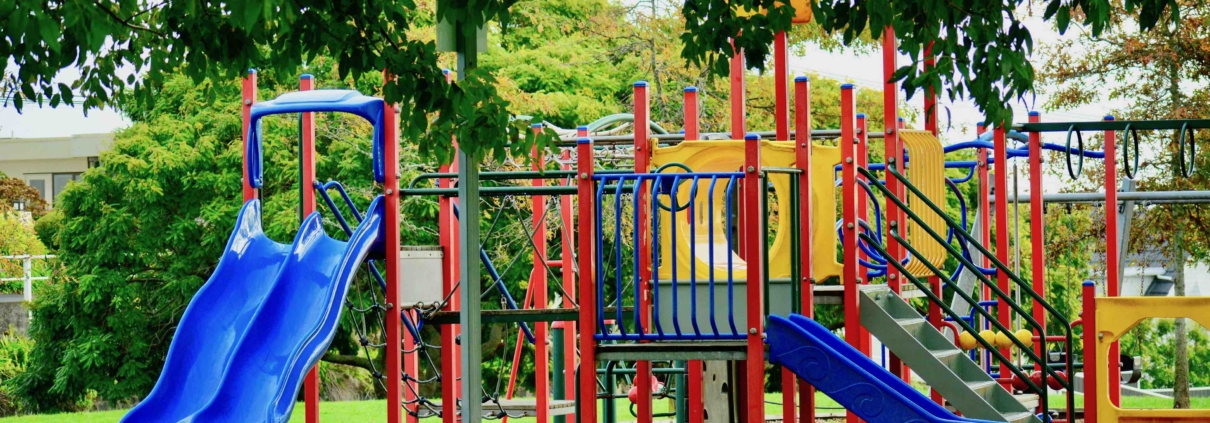
Help keep our tamariki safe — donate today
Your gift supports Soil & Health’s Safe Playgrounds Annual Appeal: community action kits, independent pesticide testing, and support for parents working with councils for spray-free parks and playgrounds. If your donation is for this campaign, please put Appeal in the reference field.
Internet banking: The Soil and Health Association of New Zealand — 02 0108 0058415 001 — reference Appeal. Email info@soilandhealth.org.nz with your name so we can send a receipt.
Credit card — fill in the fields below:
Donate
Our pesticide-free playgrounds campaign
Last year, a new member called Kate joined Soil & Health. Kate is a young mum who simply wants her child to grow up with safe, healthy places to play.
One day, while at her local playground with her child, Kate watched a council contractor spraying chemicals around the park. She was shocked and worried. Were the chemicals safe? Should children be playing there? Who could she contact? What could she do?
Kate connected with our team and soon discovered she wasn’t alone. Parents across Aotearoa share the same concerns about pesticides in playgrounds, parks and public spaces. They want answers, and they want change — and we want to help them.
That’s why our Annual Appeal 2026 is focused on Safe Parks and Playgrounds as part of our wider Pesticide Action / Glyphosate Campaign.
What your donation makes possible
- Raise $30,000 to kick-start this work and help parents make real change in their communities.
- Practical action kits for mums, dads and local groups — tools to work with councils for spray-free playgrounds.
- Independent testing of playgrounds around New Zealand for pesticide residues — evidence communities can use to ask questions and hold decision-makers accountable.
Every child deserves the freedom to run, climb and explore without being exposed to harmful pesticides. Together we can keep our tamariki safe, support families like Kate’s, and encourage councils toward healthier, chemical-free vegetation management.
Why playgrounds matter
Parks, playgrounds, schools and public roadsides are regularly sprayed with glyphosate-based herbicides and other chemicals. Despite growing evidence of harm, many councils still rely on contractors to spray public places for weed and vegetation management. That outdated practice puts people, pets and especially children at unnecessary risk.
Children are more vulnerable to pesticide exposure: they play close to the ground, put hands in their mouths, and their developing bodies are more sensitive to toxic chemicals. Safe, chemical-free playgrounds are a basic public-health measure — not a nice-to-have.
Learn more & take action
- Annual Appeal 2026 – Safe Playgrounds and Parks — the full appeal letter from Asha Andersen, Pesticide Campaign Co-ordinator
- Our Glyphosate Campaign — resources, science summaries, and how to push for glyphosate-free streets and parks
- Soil & Health launches glyphosate campaign — why we called on councils to stop spraying
- Goodbye Glyphosate! Rethinking Weeds — alternatives to chemical weed control
- Glyphosate in NZ Playgrounds: Why Should We Assume Safety? — why residue testing matters
- Contact Asha Andersen, Pesticide Campaign Co-ordinator: asha.andersen@soilandhealth.org.nz
- Non-Toxic Neighbourhoods Aotearoa (Facebook) and @nontoxicnz — community organising for chemical-free streets, parks and play spaces
Dog owners & pet advocates
Dogs walk the same sprayed berms and parks as our children — often with noses and paws on recently treated ground. There is no single national NZ dog-owner association running a pesticide campaign right now, but these resources and active campaigns show the same fight for safer public spaces:
- Glyphosate puts pets at risk from cancer too (PDF) — Soil & Health briefing on glyphosate and companion animals
- Save Our Animals from Toxic Chemical Spraying by Councils — UK petition calling on councils to stop toxic herbicide spraying in parks, play areas and pathways
- Tendring dog owners: stop using harmful weed killer — UK dog-walker campaign and petition against glyphosate spraying after pets fell ill
US & European advocacy on removing pesticides from playgrounds and parks
Communities overseas are already winning spray-free parks and playgrounds. These organisations offer evidence, toolkits and models we can adapt here:
- Non-Toxic Neighborhoods (USA) — protecting children where they live, learn and play; organic / regenerative land management with 200+ partner cities (Soil & Health partners with this network)
- StonyFIELDS #PlayFree — US initiative (with Beyond Pesticides and Non-Toxic Neighborhoods) to transition playing fields and parks off harmful pesticides
- Beyond Pesticides – Children and Schools and Parks for a Sustainable Future — US tools for pesticide-free parks, playgrounds and school grounds
- PAN Asia-Pacific — Pesticide Action Network Asia Pacific
- PAN Europe – Pesticide Free Towns — European campaign to ban pesticides from public spaces including playgrounds, parks and school surroundings; see also pesticide-free-towns.info
- PAN UK – Make my town pesticide-free — campaigner guides, petitions and pesticide-free towns network across the UK
- Beyond Pesticides – Tools for Change — how to organise locally for organic land management and pesticide-free parks
Thank you for standing with us. Whether you can give $10, $20, $50, $100 or more — or a small weekly contribution — your generosity turns these ideas into safer places for children to play.