

• Link to Facebook
  • Link to Instagram
  • Link to LinkedIn
Reset access here. New digital membership system.
Soil and Health Association of NZ
  • GE Donate
  • About Us
    • History
    • Policies
    • National Council
    • Team
    • Branches
    • Contact Us
  • Events
  • Shop
  • Login
  • Membership
  • Click to open the search input field Click to open the search input field Search
  • Menu Menu
Blog - Latest News
Jenny Lux Soil and Health Assn

Organic regenerative farming needed to reduce climate change, not GE

12 June 2023/in Farming, Media Releases, Organics

New Zealand doesn’t need a loosening of GE regulation to combat climate change, it needs significant investment in organic, regenerative agriculture, says the Soil & Health Association.

Parliament recently passed the Organic Products and Production Act, with cross-party support. This should be a springboard to revolutionise our farming and exports, but making it easier to release GMOs into the environment will jeopardise that.

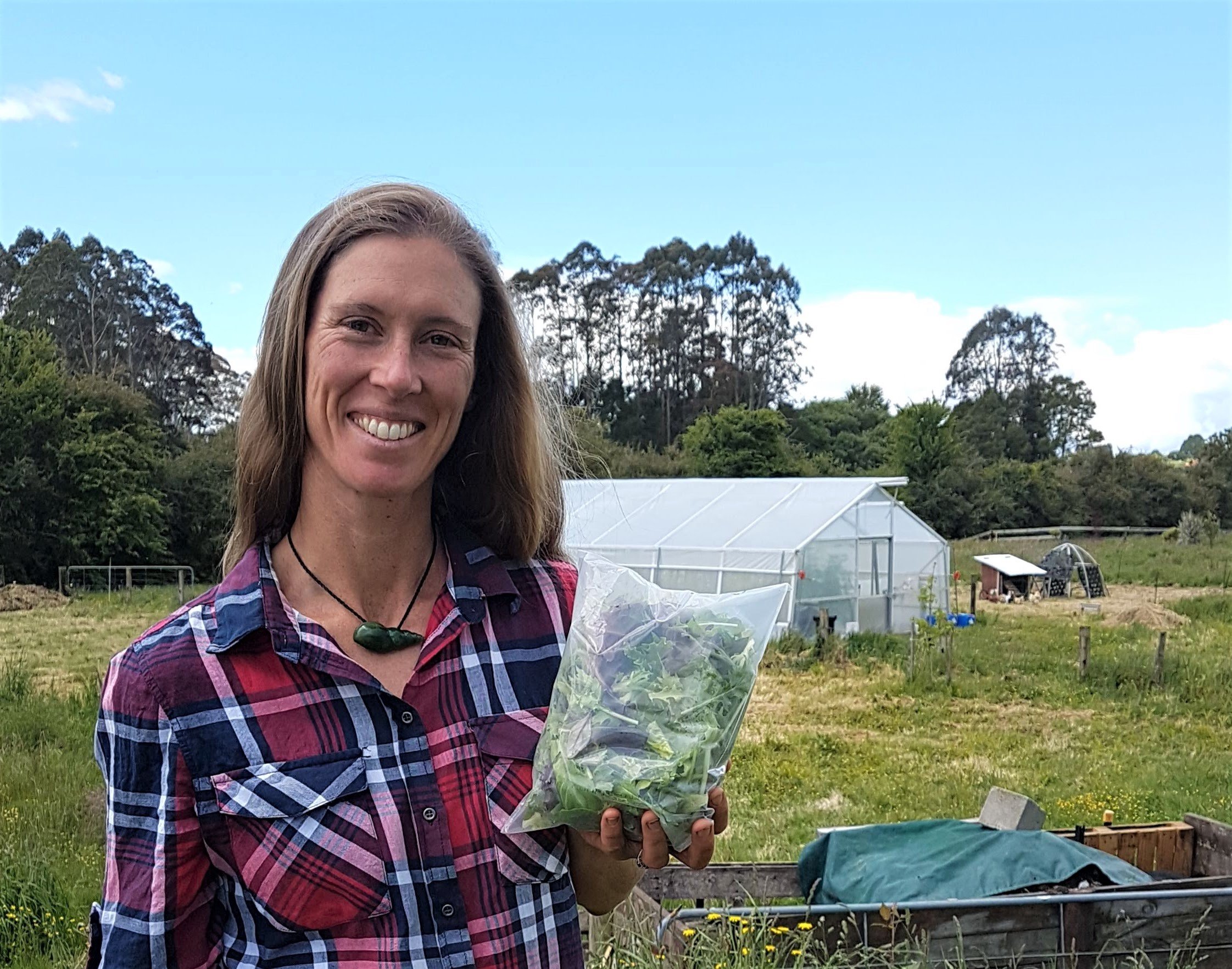
“By being GE-free, we’re far from ‘missing out.’ Being GE-free gives us a point of difference in the world market,” says Jenny Lux, Chair of Soil & Health.

“We already have an advantage in being an island nation in the South Pacific, and need to be really careful about any uncontrolled releases of GMOs into the outdoors. Our products are attractive to overseas buyers because they’re seen as clean, safe, natural and uncontaminated. Once we release GMOs there’s no containing them. We need to continue to safeguard our environment and our brand.”

Obvious agricultural solutions to lower greenhouse gas emissions, such as reducing or eliminating synthetic nitrogen fertilisers, have not been implemented at scale. Now there’s a renewed focus on gene technologies, which are attractive to corporates and researchers because they can be patented and commercialised.

But GE has not yet lived up to the hope or the hype. The $25 million dollar New Zealand GE ryegrass trials have not yet yielded more dry matter than traditionally bred rye grasses. These would be grown in monocultures, or with only one or two other species, which is not good for long term soil health.

“It’s already been demonstrated that diverse, mixed species pastures reduce ruminant methane emissions, and are more resilient to climate extremes,” says Jenny Lux.  “Organic regenerative farming methods are free for all farmers to adopt, and unsurprisingly, they’re not under any patents.”

Soil & Health urges all NZ political parties not to loosen regulations on GE in NZ, and instead to direct attention and funding towards expanding organic farming here. Organic regenerative farming sequesters more carbon in the soil, and uses fewer costly inputs, empowering farmers. “We need research centres dedicated to organic, regenerative agriculture and farmer extension programmes to build that knowledge in rural communities,” says Jenny Lux.
Tags: climate change
https://soilandhealth.org.nz/wp-content/uploads/2023/06/Jenny-Lux-Soil-and-Health-Assn-1.jpg 1769 1649 editor https://soilandhealth.org.nz/wp-content/uploads/2024/09/Soil-and-Health-Association_logoFA-web2024.jpg editor2023-06-12 12:27:342024-08-26 07:56:10Organic regenerative farming needed to reduce climate change, not GE
You might also like
Letter to Ministers and MPs: Seizing the opportunities of organic regenerative farming
Climate change
Submission on Climate Change Response (Zero Carbon) Amendment Bill
Submission of the Soil & Health Association on the Emissions Reduction Plan
Soil & Health joins call for immediate action on farming emissions

Latest Posts

  • Counting earthworms at Tapu Te Ranga
    Event grants for Soil & Health members14 June 2022 -
  • Example calendar covers 2026
    2027 Calendars30 July 2026 -
  • Tick boxes or checklist
    2026 AGM Voting1 July 2026 -
  • Cows in Field
    Submission on the Agricultural Compounds and Veterinary Medicines Amendment Bill29 June 2026 -
  • Call for nominations and remits — 2026 AGM27 June 2026 -
  • 2026 AGM of the Soil & Health Association: 26 September27 June 2026 -
  • honeybee on forget-me-not flower
    Submission on the Hazardous Substances and New Organisms Amendment Bill14 June 2026 -
  • Organic Week returns with online events on soil, food and health29 April 2026 -
  • UPDATE: Te Henga Wetland Spraying with Glyphosate8 April 2026 -
  • beach and coastal scenery
    Soil & Health Submission on the Natural Environment Bill 20258 April 2026 -
  • Australasian bittern - matuku/hūrepo - in wetland
    Te Henga Wetland6 March 2026 -

Content

  • Tags
  • Categories
  • Content
  • Branches
  • Gallery – People

About

  • About Us
  • History
  • Careers
  • Team
  • Donate

Privacy

  • Privacy Policy
  • Terms and Conditions
  • Contact Us
  • Reset access
  • Renew your membership

Social

  • Facebook
  • Instagram
  • LinkedIn
  • Join
  • Logout
© 2024 Soil and Health Association NZ, All rights reserved. Some content CC Creative Commons. Thanks to all open source Wordpress & CiviCRM contributors.
  • Link to Facebook
  • Link to Instagram
  • Link to LinkedIn
Link to: Our submission on the National Organic Standard Link to: Our submission on the National Organic Standard Our submission on the National Organic Standard Link to: 2023 AGM of the Soil & Health Association Link to: 2023 AGM of the Soil & Health Association 2023 AGM of the Soil & Health Association
Scroll to top Scroll to top Scroll to top