Te Henga Wetland
Technical Review of Herbicide Use and Risks
Charles Hyland, Chair, Soil & Health Association of New Zealand
26 Sept 2025
Executive summary
Two herbicide products have been reportedly used at Te Henga wetland: Polaris 450 (a 450 g/L glyphosate isopropylamine salt formulation) and Aquakynde (an anionic surfactant adjuvant). (Matuku Link)
[UPDATE March 2026: herbicide spraying again being undertaken – Waatea News]
The Environmental Protection Authority (EPA) approval for Polaris 450 (HSR000227) classifies the product as harmful if inhaled (H332), causes serious eye irritation (H319), and toxic to aquatic life with long-lasting effects (H411). The Polaris 450 Safety Data Sheet (SDS) also instructs users not to allow the product to enter waterways.
Aquakynde carries serious eye damage (H318) and aquatic harm (H402/H412) classifications; its active surfactant chemistry (e.g., sodium alkylbenzene sulfonate types) is known to be harmful to aquatic organisms at low mg/L levels.
Under New Zealand’s Hazardous Substances regime, most agrichemicals with aquatic hazards must not be applied into or onto water. For Polaris 450 specifically, the EPA has replaced the usual “no application into or onto water” rule with special “water application” controls: if application into or onto water is contemplated and the water could leave the application site, then the strictest aquatic controls apply (treated “as if” Aquatic Acute Category 1).
The Auckland Unitary Plan (AUP) E34 Agrichemicals adds local requirements on spray-drift management, setbacks, operator competence, and record keeping, with wetlands clearly treated as sensitive receiving environments.
Wetlands are intrinsically high-exposure settings: spray drift, wash-off, and hydrologic connectivity funnel herbicide–surfactant mixtures into standing water and saturated sediments with long residence times. Glyphosate binds to sediments and is microbially transformed into aminomethylphosphonic acid (AMPA), which can persist. A large literature shows that aquatic toxicity of glyphosate-based products is often driven by the surfactant system, not glyphosate alone, with amphibian eggs and larvae particularly sensitive at low mg/L concentrations.
Bottom line: Spraying in, over, or immediately adjacent to standing water in a wetland creates a high-risk exposure pathway that is difficult to keep compliant and is readily avoidable.
A precautionary pause, an independent compliance audit, switching to non-spray or contact-limited methods, and basic monitoring are warranted.
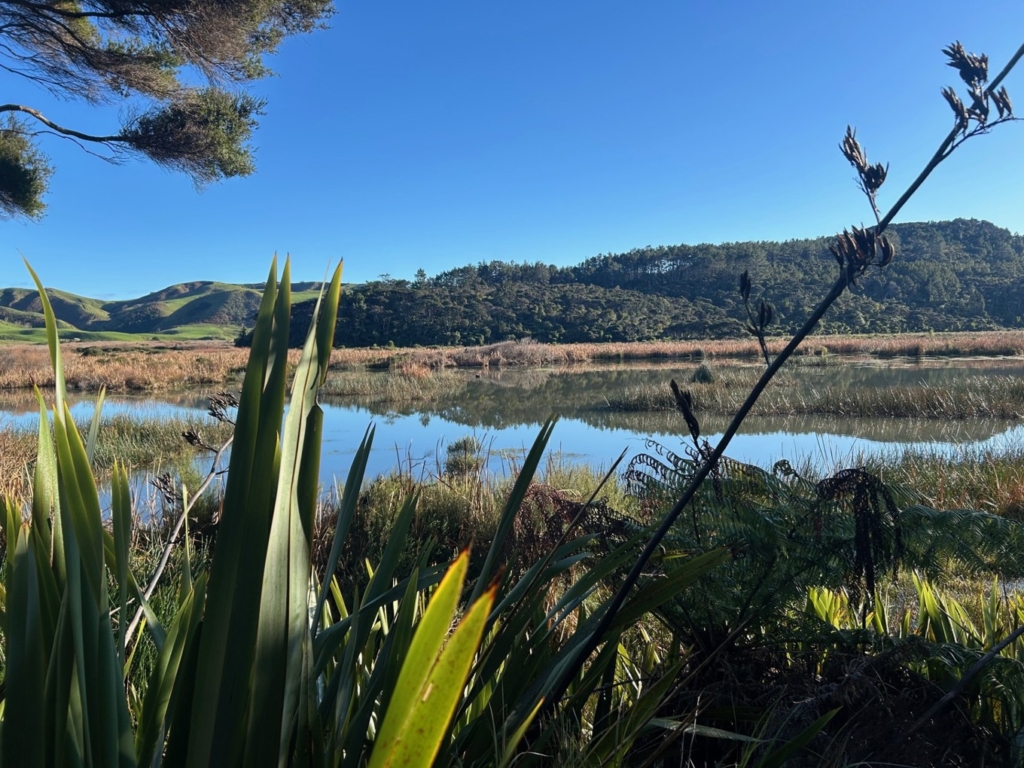
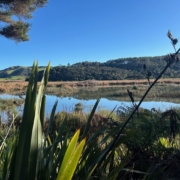
Photo: Te Henga wetland, Auckland Council
Products and hazards
Polaris 450 (glyphosate IPA, 450 g/L). EPA approval HSR000227 classifies Polaris 450 as H332, H319 and H411; its SDS further cautions “Do not allow product to enter waterways.” (Horticentre Group)
Aquakynde (anionic surfactant adjuvant). The attachment provided identifies serious eye damage (H318) and aquatic harm (H402/H412) with an anionic surfactant (e.g., benzenesulfonic acid, C10–13-alkyl derivatives, sodium salts; CAS series including 68515-73-1 / 68411-30-3). Representative SDS documents for these surfactants report fish LC50 ≈ 1.7 mg/L and Daphnia EC50 ≈ 2.9 mg/L, consistent with Aquatic Chronic hazard classifications. (Alconox)
Mixture concern. When glyphosate formulations are tank-mixed with additional surfactant, the overall aquatic hazard typically increases compared with glyphosate alone because surfactants can drive toxicity and membrane permeability in aquatic organisms. (PubMed)
Legal and planning framework (national and regional)
- EPA “water application” controls for Polaris 450. For approval HSR000227, Clause 52 of the Hazardous Property Controls Notice (“no application into or onto water”) is expressly dis-applied. Instead, if application into or onto water is contemplated and the substance could leave the application site (via water movement), then Clauses 62–64 (the strictest aquatic controls) apply as if the substance were Aquatic Acute Category 1. In practical terms, that tightens controls substantially whenever treated water could flow beyond the site.
- Auckland Unitary Plan (AUP) E34 — Agrichemicals. Sets local standards on buffers, drift management, operator competence, and records, and recognises wetlands/water bodies as sensitive receiving environments.
- NZS 8409:2021 Management of Agrichemicals (NZS 8409). Widely referenced best-practice standard for agrichemical use; regional plans and guidance routinely point users to NZS 8409 for drift reduction, setbacks, and water protection. (GrowSafe)
Implication for Te Henga: Even where “water application” may be contemplated under HSR000227, meeting the strict controls and AUP E34 expectations in a complex wetland is demanding, and label instructions (e.g., do not allow to enter waterways) still apply. (Horticentre Group)
Wetland exposure pathways
In Te Henga’s mosaic of pools, drains, and saturated peat, likely exposure routes include:
- Direct application/overspray into standing water;
- Spray drift from bank-side treatments depositing droplets on water or saturated substrates;
- Wash-off/runoff after rainfall carrying dissolved glyphosate and surfactants into pools and drains; and
- Sediment interaction, where glyphosate sorbs and is transformed to AMPA. In wetlands with slow turnover and organic sediments, both glyphosate and AMPA can persist, extending exposure windows for aquatic plants, invertebrates, fish, amphibians, and microbial communities.
What good compliance should already cover
- No routine spraying into/over standing water when practicable alternatives exist; where “water application” is proposed, apply HSR000227’s strict controls (treat as if Aquatic Acute Cat. 1) and document how off-site movement is prevented.
- AUP E34 plan compliance: mapped buffers, defined wind and weather limits, drift-reduction setup (nozzle, pressure, boom height), operator competence, and full records.
- Label and SDS adherence, including no-spray instructions, rates, frequency, re-entry intervals, and “do not allow to enter waterways.” (Horticentre Group)
- Work to NZS 8409 practices for agrichemical use near water. (GrowSafe)
Health and ecological science relevant to decisions
- Environmental fate. Glyphosate typically shows moderate persistence in aquatic and soil systems (typical reported half-lives from ~10–77 days in water depending on conditions and ~47–75 days in soil), with AMPA formation and persistence in sediments; bioaccumulation is low. (Horticentre Group)
- Formulation-driven aquatic toxicity. Multiple studies show surfactants used with glyphosate (historically POEA and other systems) can drive toxicity of the end-use product at low mg/L levels relevant to shallow wetlands. Amphibian eggs and larvae are highly sensitive. (PubMed)
- Mechanisms. Surfactants increase membrane permeability and facilitate uptake, producing greater effects than glyphosate alone; co-formulants and adjuvants can increase product toxicity or show independent toxicity. (PMC)
Findings specific to Te Henga
- Both reported products carry explicit aquatic hazards; Polaris 450 further cautions against entry to waterways. Adding Aquakynde increases the likelihood of aquatic effects relative to glyphosate alone. (Horticentre Group)
- Edge/bank applications without robust drift control, adequate buffers, and strict low-wind windows create realistic acute exposure for amphibians and macroinvertebrates, especially in shallow, low-flow pools common in wetlands. (PubMed)
- The HSR000227 “water application” controls raise the compliance bar if any application into or onto water is contemplated and water could leave the site. In a hydrologically connected wetland like Te Henga, that condition is difficult to rule out.
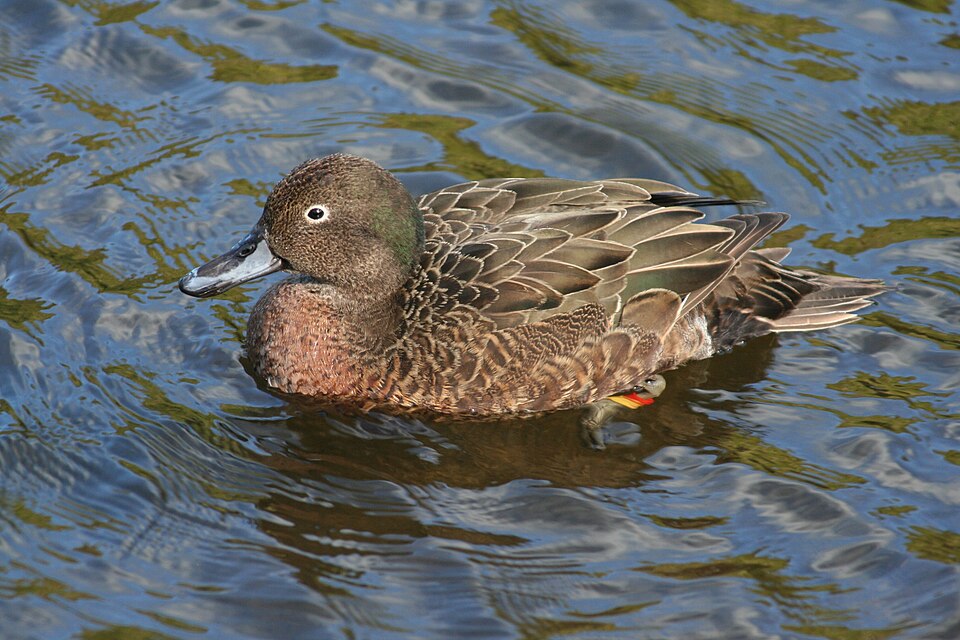
ABOVE: Pāteke (brown teal) at Tiritiri Mātangi. In 2015 pāteke were reintroduced to Te Henga wetland. Photo: Sabines Sunbird
Recommendations
- Pause all spraying within and immediately adjacent to standing water pending an independent compliance review against EPA controls and AUP E34.
- Commission a qualified, independent agrichemical auditor (not the contractor) to verify wetland and water-body mapping, buffers, drift-reduction measures, operator competence, label/SDS compliance, and record keeping. (Horticentre Group)
- Implement short-term monitoring: baseline and post-event water and sediment sampling for glyphosate and AMPA at representative sites, plus simple biota checks (e.g., amphibian larval presence/absence transects) before and after the spray season.
- If vegetation control is still needed, avoid broadcast/foliar spraying over open water. Prefer cut-stump, drill-and-fill, or wiper/wick methods executed from stable ground with physical shielding and absorbent capture to prevent drips and runoff.
- Omit added surfactants where the herbicide label does not require them, and avoid high-hazard surfactants (e.g., POEA-type systems) near wetlands. (PMC)
- Pair manual/mechanical removal with rapid native revegetation to reduce repeat chemical interventions.
- Establish governance practices: pre-operation plans (buffers; nozzle/pressure; weather triggers; product batch IDs) and post-operation reports (treated area, volumes, weather, incidents). Notify iwi and local communities in advance and publish summary monitoring results.
Requests to the Parliamentary Commissioner for the Environment (PCE)
- Commission an independent review of Te Henga operations for consistency with EPA water-application controls (HSR000227) and AUP E34.
- Issue guidance to councils on minimum protections in wetlands: buffers, drift technology, method hierarchy (prefer non-spray/contact-limited methods), and monitoring.
- Encourage agencies to avoid surfactant-assisted foliar spraying in wetlands, allowing exceptions only with a formal, transparent decision record.
- Recommend baseline monitoring support so decisions are evidence-based (and the absence of measurements is not used as a defence).
Notes on the Safety Data Sheets
- Aquakynde bullet points. Lists H318 and H402/H412 and identifies an anionic surfactant (e.g., alkylbenzene sulfonate, CAS series including 68515-73-1 / 68411-30-3). Representative SDSs for these chemistries document mg/L-level aquatic toxicity, aligning with heightened concern for wetland organisms. (Alconox)
- Polaris 450 bullet points. Cite HSR000227 and H332/H319/H411 and reiterate waterway protection. The full SDS echoes these warnings. (Horticentre Group)
Scope and limitations
This review integrates product hazard information, New Zealand regulatory requirements, and peer-reviewed evidence on wetland exposure and toxicity, interpreted for Te Henga. It does not reconstruct field practices or verify on-site conditions. For a complete compliance assessment, obtain work plans, spray diaries, weather/wind records, equipment and operator certificates, GPS traces, and pair these with site inspections and basic sampling.
References
- Matuku Link. Pest Plant Control. https://matukulink.org.nz/pest-plant-control/
- Waatea News. Drone Glyphosate Spraying at Te Henga Proceeds Despite Court Appeal. https://waateanews.com/2026/03/06/economy-drone-glyphosate-spraying-at-te-henga-proceeds-despite-court-appeal/
- Environmental Protection Authority (EPA). Reissued approvals with water application controls — Glyphosate approvals including HSR000227. (see “HSR000227 – Glyphosate (as its isopropylamine salt) – soluble concentrates”; Clause 52 dis-applied; Clauses 62–64 apply “as if” Aquatic Acute Cat. 1 when water could leave the site). https://epa.govt.nz/industry-areas/hazardous-substances/rules-for-hazardous-substances/reissued-approvals-with-water-application-controls/
- ADAMA New Zealand. Polaris 450 Herbicide — Safety Data Sheet (17 Mar 2023). States H332/H319/H411 and “Do not allow product to enter waterways.” https://horticentre.co.nz/wp-content/uploads/SafetyDatasheets/Polaris-450-SDS.pdf
- Auckland Council. Auckland Unitary Plan — E34 Agrichemicals (operative in part). https://unitaryplan.aucklandcouncil.govt.nz/Images/Auckland%20Unitary%20Plan%20Operative/Chapter%20E%20Auckland-wide/5.%20Environmental%20Risk/E34%20Agrichemicals%20and%20vertebrate%20toxic%20agents.pdf
- Australian and New Zealand Governments (ANZG). Guideline values for freshwater: Glyphosate (technical brief; environmental fate, persistence, sorption). https://www.waterquality.gov.au/sites/default/files/documents/glyphosate_fresh_dgv_technical-brief.pdf
- Growsafe / Standards NZ. NZS 8409:2021 Management of Agrichemicals — overview and access. https://www.growsafe.co.nz/Growsafe/GrowSafe/AboutUs/NZS8409.aspx
- Howe, C. M., et al. (2004). Toxicity of glyphosate-based pesticides to four North American frog species. Environmental Toxicology and Chemistry, 23(8): 1928–1938. PubMed record: https://pubmed.ncbi.nlm.nih.gov/15352482/
- Relyea, R. A. (2005). The lethal impact of Roundup® on aquatic and terrestrial amphibians. Ecological Applications, 15(4): 1118–1124. Wiley abstract: https://esajournals.onlinelibrary.wiley.com/doi/abs/10.1890/04-1291 (open copy archived by NRC: https://www.nrc.gov/docs/ML1434/ML14345A564.pdf)
- Trumbo, J., et al. (2003). An assessment of the hazard of the herbicide Rodeo® and the non-ionic surfactant R-11® to non-target aquatic invertebrates and larval amphibians. California IPC (PDF): https://www.cal-ipc.org/wp-content/uploads/2017/12/Trumbo-aquatic.pdf
- Mesnage, R., & Antoniou, M. N. (2018). Ignoring adjuvant toxicity falsifies the safety profile of commercial pesticides. Frontiers in Public Health, 5: 361. https://pmc.ncbi.nlm.nih.gov/articles/PMC5786549/
- Mikó, Z., et al. (2023). Toxicity of POEA-containing glyphosate-based herbicides and their components to amphibian larvae under predation risk. Ecotoxicology and Environmental Safety, 253: 114654. https://pmc.ncbi.nlm.nih.gov/articles/PMC10008773/
- Representative anionic surfactant SDS (alkylbenzene sulfonates, showing mg/L aquatic toxicity):
a) Alconox SDS (Sodium alkylbenzene sulfonate; fish LC50 1.67 mg/L; Daphnia EC50 2.9 mg/L). https://alconox.com/wp-content/uploads/2020/07/Alconox-SDS-english.pdf
b) Forders SDS (Sodium C10–13 alkylbenzene sulfonate; aquatic toxicity section). https://www.forders.fi/storage/product_files/0/157140-157104_KTTeng.pdf