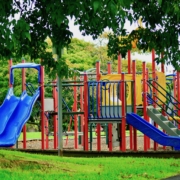
Last year, a new member called Kate joined the Soil & Health Association. Kate is a young mum who simply wants her child to grow up with safe, healthy places to play.
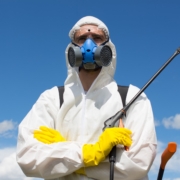
One day, while at her local playground with her child, Kate watched a council contractor spraying chemicals around the park. She was shocked and worried. Were the chemicals safe? Should children be playing there? Who could she contact? What could she do?
Kate connected with our team at Soil & Health, and soon discovered she wasn’t alone. There are many parents around the country who share the same concerns about pesticides being used in playgrounds, parks and public spaces. They want answers, and they want change – and we want to help them.
That’s why Soil & Health’s Annual Appeal this year is focused on Safe Playgrounds as part of our wider Pesticide Action Campaign.
Our goal is to raise $30,000 to kick-start this campaign and help parents make real change in their communities.
Together with Kate and others, we’re creating a practical action kit for mums, dadsand local communities, supporting them to work with councils to advocate for spray-free playgrounds. Just as importantly, we want to independently test playgrounds aroundNew Zealand for pesticide residues. Reliable testing gives communities the evidence they need to ask questions, encourage change, and hold decision-makers accountable.
Safe, healthy playgrounds are at the heart of it. Every child deserves the freedom to run, climb and explore without being exposed to harmful pesticides. Together, we can help keep our tamariki safe, support families like Kate’s, and encourage councils to do the right thing by choosing healthier, chemical-free management.
So, we’re asking you to make a donation today, help us get this work underway – test playgrounds, support communities, and create safer places for our children to play.
Your donation, large or small, brings us one step closer to our goal of $30,000. Whetheryou can give $10, $20, $50, $100 or more – or whether you can make a small weeklycontribution, your generosity will help turn these ideas into action.
Internet banking: The Soil and Health Association of New Zealand
Account: 02 0108 0058415 001 / Use “Appeal” in the reference
If you include your name in the transaction and let us know, we can make sure you receive a receipt – please email info@soilandhealth.org.nz so we can email it to you.
Why are we advocating for safe, chemical free playgrounds?
Did you know that parks, playgrounds, schools and public roadsides are regularly sprayed with glyphosate based herbicides (GBHs)?
Despite the wealth of information about these chemicals negatively affecting health, many Councils still employ contractors to spray public places for weed and vegetation management. This outdated practice unnecessarily puts people, pets and especially children at risk of harmful exposures.
That’s why we advocate for chemical-free parks, playgrounds and public places in our communities. Support safe playgrounds in Aotearoa New Zealand by making a donation to Soil and Health’s Annual Appeal.
Please make donations to:
The Soil & Health Association of New Zealand
BNZ 02-0108-0058415-01
Credit: Top Playground Photo, Natalia Marshall, iStock
https://soilandhealth.org.nz/wp-content/uploads/2026/08/iStock-1150888584medres-scaled.jpg17072560Asha Andersenhttps://soilandhealth.org.nz/wp-content/uploads/2024/09/Soil-and-Health-Association_logoFA-web2024.jpgAsha Andersen2026-08-28 06:48:522026-08-31 07:05:55Annual Appeal 2026 – Safe Playgrounds and Parks
The following is an email sent by our Chairperson, Charles Hyland, to the Parliamentary Commissioner for the Environment and also the original attached documents for your perusal:
Kia ora Parliamentary Commissioner for the Environment,
I am writing to request your office’s independent scrutiny and guidance on the use of glyphosate and surfactant spraying in sensitive wetlands in a way that, in my technical experience, appears inconsistent with how these products are intended and expected to be used. Te Henga is a timely case study with wider implications for wetland protection and good practice.
Attached are two documents from the Soil & Health Association of New Zealand regarding the resumption of herbicide spraying at Te Henga Wetland, including reports of drone application:
Cover letter on behalf of Soil & Health
Technical review summarising the reported products (Polaris 450 with Aquakynde), key exposure pathways and ecological risks in wetlands, and the relevant hazardous substances controls and local planning expectations
We appreciate your office is not an enforcement agency. Our intent is to support independent scrutiny and, where appropriate, clearer national guidance that lifts practice and reduces the likelihood of repeat harm.
I am available for a call to answer questions or provide any additional context.
In March we made a submission on the Natural Environment Bill 2025 and the related Planning Bill 2025, to voice our concerns with aspects of both bills, as we strive to raise important issues in our role as advocate for the protection and regeneration of soil, freshwater, ecosystems, and environmental health, for the benefit of all.
As there were a large number of submissions to be heard we unfortunately didn’t get the opportunity to present our views however the submission document is made available for you to download and/or view below.
We will keep you informed of developments as they come to hand.
https://soilandhealth.org.nz/wp-content/uploads/2018/10/busybeach-1.jpg8531280Staff Writerhttps://soilandhealth.org.nz/wp-content/uploads/2024/09/Soil-and-Health-Association_logoFA-web2024.jpgStaff Writer2026-04-08 22:57:502026-04-15 15:10:09Soil & Health Submission on the Natural Environment Bill 2025
Charles Hyland, Chair, Soil & Health Association of New Zealand 26 Sept 2025
Executive summary
Two herbicide products have been reportedly used at Te Henga wetland: Polaris 450 (a 450 g/L glyphosate isopropylamine salt formulation) and Aquakynde (an anionic surfactant adjuvant). (Matuku Link)
[UPDATE March 2026: herbicide spraying again being undertaken – Waatea News]
The Environmental Protection Authority (EPA) approval for Polaris 450 (HSR000227) classifies the product as harmful if inhaled (H332), causes serious eye irritation (H319), and toxic to aquatic life with long-lasting effects (H411). The Polaris 450 Safety Data Sheet (SDS) also instructs users not to allow the product to enter waterways.
Aquakynde carries serious eye damage (H318) and aquatic harm (H402/H412) classifications; its active surfactant chemistry (e.g., sodium alkylbenzene sulfonate types) is known to be harmful to aquatic organisms at low mg/L levels.
Under New Zealand’s Hazardous Substances regime, most agrichemicals with aquatic hazards must not be applied into or onto water. For Polaris 450 specifically, the EPA has replaced the usual “no application into or onto water” rule with special “water application” controls: if application into or onto water is contemplated and the water could leave the application site, then the strictest aquatic controls apply (treated “as if” Aquatic Acute Category 1).
The Auckland Unitary Plan (AUP) E34 Agrichemicals adds local requirements on spray-drift management, setbacks, operator competence, and record keeping, with wetlands clearly treated as sensitive receiving environments.
Wetlands are intrinsically high-exposure settings: spray drift, wash-off, and hydrologic connectivity funnel herbicide–surfactant mixtures into standing water and saturated sediments with long residence times. Glyphosate binds to sediments and is microbially transformed into aminomethylphosphonic acid (AMPA), which can persist. A large literature shows that aquatic toxicity of glyphosate-based products is often driven by the surfactant system, not glyphosate alone, with amphibian eggs and larvae particularly sensitive at low mg/L concentrations.
Bottom line: Spraying in, over, or immediately adjacent to standing water in a wetland creates a high-risk exposure pathway that is difficult to keep compliant and is readily avoidable.
A precautionary pause, an independent compliance audit, switching to non-spray or contact-limited methods, and basic monitoring are warranted.
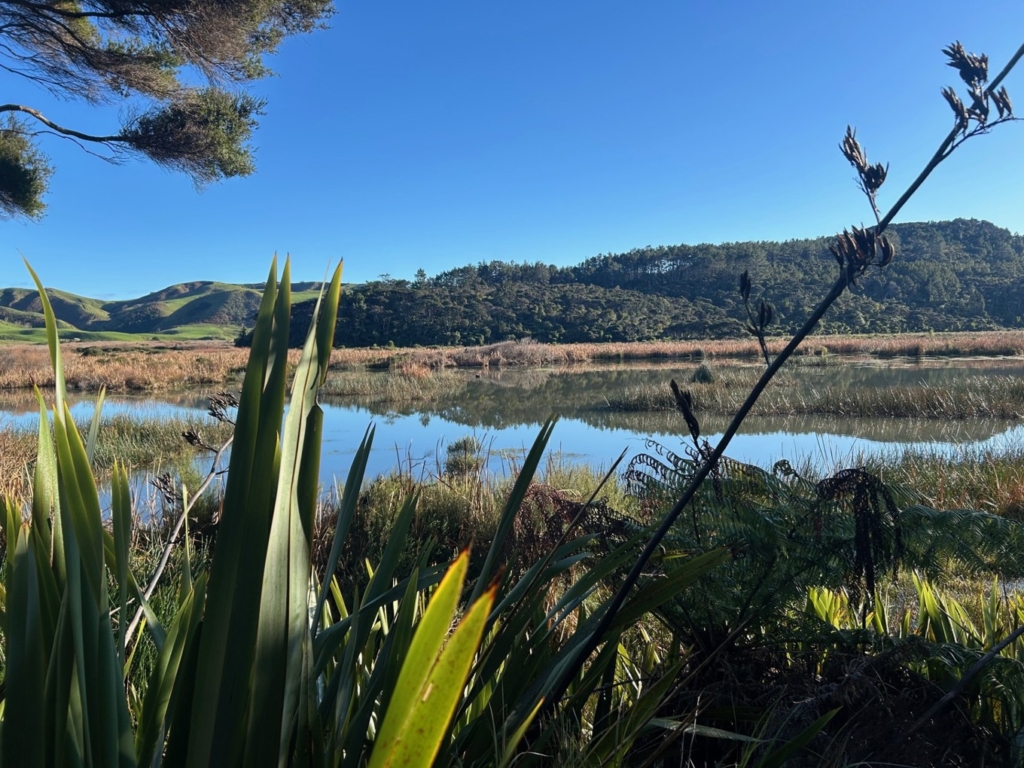
Photo: Te Henga wetland, Auckland Council
Products and hazards
Polaris 450 (glyphosate IPA, 450 g/L). EPA approval HSR000227 classifies Polaris 450 as H332, H319 and H411; its SDS further cautions “Do not allow product to enter waterways.” (Horticentre Group)
Aquakynde (anionic surfactant adjuvant). The attachment provided identifies serious eye damage (H318) and aquatic harm (H402/H412) with an anionic surfactant (e.g., benzenesulfonic acid, C10–13-alkyl derivatives, sodium salts; CAS series including 68515-73-1 / 68411-30-3). Representative SDS documents for these surfactants report fish LC50 ≈ 1.7 mg/L and Daphnia EC50 ≈ 2.9 mg/L, consistent with Aquatic Chronic hazard classifications. (Alconox)
Mixture concern. When glyphosate formulations are tank-mixed with additional surfactant, the overall aquatic hazard typically increases compared with glyphosate alone because surfactants can drive toxicity and membrane permeability in aquatic organisms. (PubMed)
Legal and planning framework (national and regional)
EPA “water application” controls for Polaris 450. For approval HSR000227, Clause 52 of the Hazardous Property Controls Notice (“no application into or onto water”) is expressly dis-applied. Instead, if application into or onto water is contemplated and the substance could leave the application site (via water movement), then Clauses 62–64 (the strictest aquatic controls) apply as if the substance were Aquatic Acute Category 1. In practical terms, that tightens controls substantially whenever treated water could flow beyond the site.
Auckland Unitary Plan (AUP) E34 — Agrichemicals. Sets local standards on buffers, drift management, operator competence, and records, and recognises wetlands/water bodies as sensitive receiving environments.
NZS 8409:2021 Management of Agrichemicals (NZS 8409). Widely referenced best-practice standard for agrichemical use; regional plans and guidance routinely point users to NZS 8409 for drift reduction, setbacks, and water protection. (GrowSafe)
Implication for Te Henga: Even where “water application” may be contemplated under HSR000227, meeting the strict controls and AUP E34 expectations in a complex wetland is demanding, and label instructions (e.g., do not allow to enter waterways) still apply. (Horticentre Group)
Wetland exposure pathways
In Te Henga’s mosaic of pools, drains, and saturated peat, likely exposure routes include:
Direct application/overspray into standing water;
Spray drift from bank-side treatments depositing droplets on water or saturated substrates;
Wash-off/runoff after rainfall carrying dissolved glyphosate and surfactants into pools and drains; and
Sediment interaction, where glyphosate sorbs and is transformed to AMPA. In wetlands with slow turnover and organic sediments, both glyphosate and AMPA can persist, extending exposure windows for aquatic plants, invertebrates, fish, amphibians, and microbial communities.
What good compliance should already cover
No routine spraying into/over standing water when practicable alternatives exist; where “water application” is proposed, apply HSR000227’s strict controls (treat as if Aquatic Acute Cat. 1) and document how off-site movement is prevented.
AUP E34 plan compliance: mapped buffers, defined wind and weather limits, drift-reduction setup (nozzle, pressure, boom height), operator competence, and full records.
Label and SDS adherence, including no-spray instructions, rates, frequency, re-entry intervals, and “do not allow to enter waterways.” (Horticentre Group)
Work to NZS 8409 practices for agrichemical use near water. (GrowSafe)
Health and ecological science relevant to decisions
Environmental fate. Glyphosate typically shows moderate persistence in aquatic and soil systems (typical reported half-lives from ~10–77 days in water depending on conditions and ~47–75 days in soil), with AMPA formation and persistence in sediments; bioaccumulation is low. (Horticentre Group)
Formulation-driven aquatic toxicity. Multiple studies show surfactants used with glyphosate (historically POEA and other systems) can drive toxicity of the end-use product at low mg/L levels relevant to shallow wetlands. Amphibian eggs and larvae are highly sensitive. (PubMed)
Mechanisms. Surfactants increase membrane permeability and facilitate uptake, producing greater effects than glyphosate alone; co-formulants and adjuvants can increase product toxicity or show independent toxicity. (PMC)
Findings specific to Te Henga
Both reported products carry explicit aquatic hazards; Polaris 450 further cautions against entry to waterways. Adding Aquakynde increases the likelihood of aquatic effects relative to glyphosate alone. (Horticentre Group)
Edge/bank applications without robust drift control, adequate buffers, and strict low-wind windows create realistic acute exposure for amphibians and macroinvertebrates, especially in shallow, low-flow pools common in wetlands. (PubMed)
The HSR000227 “water application” controls raise the compliance bar if any application into or onto water is contemplated and water could leave the site. In a hydrologically connected wetland like Te Henga, that condition is difficult to rule out.
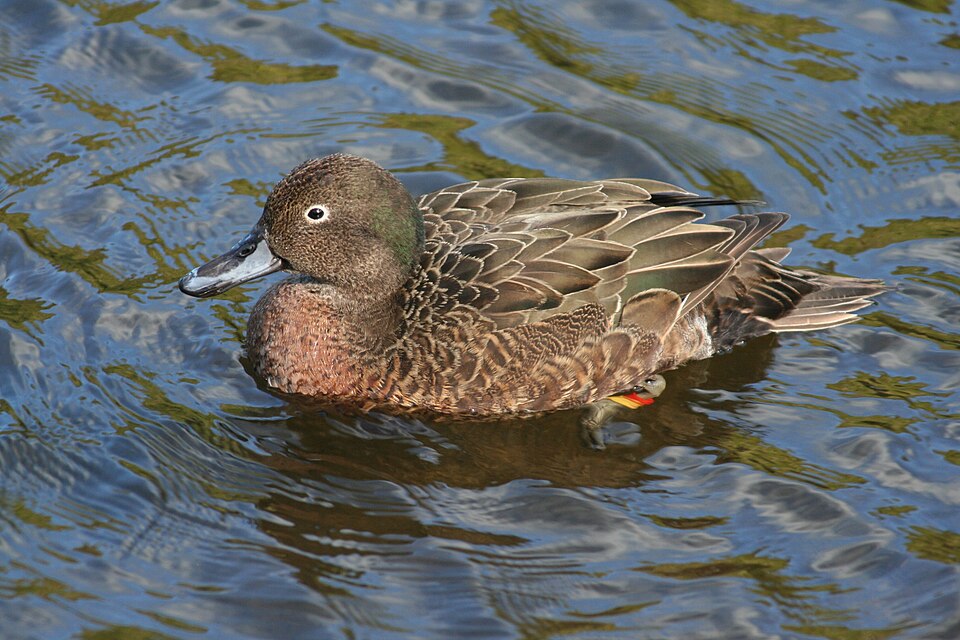
ABOVE: Pāteke (brown teal) at Tiritiri Mātangi. In 2015 pāteke were reintroduced to Te Henga wetland. Photo: Sabines Sunbird
Recommendations
Pause all spraying within and immediately adjacent to standing water pending an independent compliance review against EPA controls and AUP E34.
Commission a qualified, independent agrichemical auditor (not the contractor) to verify wetland and water-body mapping, buffers, drift-reduction measures, operator competence, label/SDS compliance, and record keeping. (Horticentre Group)
Implement short-term monitoring: baseline and post-event water and sediment sampling for glyphosate and AMPA at representative sites, plus simple biota checks (e.g., amphibian larval presence/absence transects) before and after the spray season.
If vegetation control is still needed, avoid broadcast/foliar spraying over open water. Prefer cut-stump, drill-and-fill, or wiper/wick methods executed from stable ground with physical shielding and absorbent capture to prevent drips and runoff.
Omit added surfactants where the herbicide label does not require them, and avoid high-hazard surfactants (e.g., POEA-type systems) near wetlands. (PMC)
Pair manual/mechanical removal with rapid native revegetation to reduce repeat chemical interventions.
Establish governance practices: pre-operation plans (buffers; nozzle/pressure; weather triggers; product batch IDs) and post-operation reports (treated area, volumes, weather, incidents). Notify iwi and local communities in advance and publish summary monitoring results.
Requests to the Parliamentary Commissioner for the Environment (PCE)
Commission an independent review of Te Henga operations for consistency with EPA water-application controls (HSR000227) and AUP E34.
Issue guidance to councils on minimum protections in wetlands: buffers, drift technology, method hierarchy (prefer non-spray/contact-limited methods), and monitoring.
Encourage agencies to avoid surfactant-assisted foliar spraying in wetlands, allowing exceptions only with a formal, transparent decision record.
Recommend baseline monitoring support so decisions are evidence-based (and the absence of measurements is not used as a defence).
Notes on the Safety Data Sheets
Aquakynde bullet points. Lists H318 and H402/H412 and identifies an anionic surfactant (e.g., alkylbenzene sulfonate, CAS series including 68515-73-1 / 68411-30-3). Representative SDSs for these chemistries document mg/L-level aquatic toxicity, aligning with heightened concern for wetland organisms. (Alconox)
Polaris 450 bullet points. Cite HSR000227 and H332/H319/H411 and reiterate waterway protection. The full SDS echoes these warnings. (Horticentre Group)
Scope and limitations
This review integrates product hazard information, New Zealand regulatory requirements, and peer-reviewed evidence on wetland exposure and toxicity, interpreted for Te Henga. It does not reconstruct field practices or verify on-site conditions. For a complete compliance assessment, obtain work plans, spray diaries, weather/wind records, equipment and operator certificates, GPS traces, and pair these with site inspections and basic sampling.
Howe, C. M., et al. (2004). Toxicity of glyphosate-based pesticides to four North American frog species. Environmental Toxicology and Chemistry, 23(8): 1928–1938. PubMed record: https://pubmed.ncbi.nlm.nih.gov/15352482/
Mesnage, R., & Antoniou, M. N. (2018). Ignoringadjuvant toxicity falsifies the safety profile of commercial pesticides. Frontiers in Public Health, 5: 361. https://pmc.ncbi.nlm.nih.gov/articles/PMC5786549/
Mikó, Z., et al. (2023). Toxicity of POEA-containing glyphosate-based herbicides and their components to amphibian larvae under predation risk. Ecotoxicology and Environmental Safety, 253: 114654. https://pmc.ncbi.nlm.nih.gov/articles/PMC10008773/
The Soil & Health Association of New Zealand is an incorporated society founded in 1941. Its primary purpose is to promote and advocate the production and consumption of organic food. Our motto is ‘Healthy soil – healthy food – healthy people: Oranga nuku – oranga kai – oranga tāngata’.
We represent approximately 17,000 members and supporters around Aotearoa New Zealand, including consumers, home gardeners, farmers, horticulturists, business people, chefs and more.
Our members and supporters are health conscious and highly concerned about their food: how it’s produced, what’s in it, and what effects it has. They want food that is natural and unadulterated, free from harmful chemicals and toxins, and produced in ways that enhance our soils, environments, health and communities.
We represent people who have many reasons for wanting to avoid GE food – such as health, environmental, ethical, cultural, philosophical, climate change and more.
The Soil & Health Association (hereafter Soil & Health) welcomes the opportunity to submit on this application.
Submission
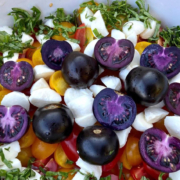
Soil & Health categorically opposes the application for the Purple Tomato for the following reasons.
No justification
Norfolk Healthy Produce’s justification for their application is that the genetically engineered Purple Tomato contains high levels of anthocyanins, which are beneficial compounds.
However, simply containing high levels of anthocyanins is no justification for allowing this genetically engineered tomato into the food supply of New Zealand and Australia.
This application is for an unnecessary food and is primarily for the purpose of patenting.
There are already numerous plant foods that contain anthocyanins, such as blueberries, blackcurrants, blackberries, elderberries, cherries, purple grapes, eggplants, purple cabbage, purple cauliflower, purple carrots, blue corn, red onions, oranges, raspberries, red wine, pink grapefruit, red radishes, purple asparagus, black beans, red broad beans, and many more.
There are already several heirloom varieties of tomato with blue and purple hues that contain anthocyanins.
The applicant’s claim (as part of its justification for the application) that the Purple Tomato is visually striking and ‘delights consumers’ is subjective and a flimsy justification for the application.
Human health effects are unknown
A pilot study on mice was conducted in 2008 and showed and found some benefits of consuming the Purple Tomato in terms of longer life span (Butelli et al, 2008 – referred to in the application).
However this was a limited, small-scale study on just 20 mice, and further tests of a more extensive scope are required to provide evidence of beneficial and/or adverse health effects.
The health effects (positive and negative) of humans consuming these tomatoes are unknown. To our knowledge there have been no trials involving humans.
As the UK’s National Health Service said: ‘until the tomato is tested in humans we cannot be sure that it will offer the same benefits, or that there will not be any unexpected harms’.
Potential adverse health effects
Soil & Health notes that while anthocyanins are generally beneficial for health, they are not essential nutrients.
When anthocyanins are taken in pill form, safe levels may be exceeded, and they may have adverse health effects including the potential to limit iron absorption.
The levels of anthocyanins in the Purple Tomato are much higher than occur in other foods and in supplement form, but there is limited research on the overconsumption of anthocyanins except when taken as supplements.
Before approving the introduction of the Purple Tomato to our diet, independent research must first be undertaken into the health effects of consuming it, to investigate any potential adverse effects.
We don’t know the safe upper limits of anthocyanin consumption. A Harvard University mini review states there is a ‘need for increased regulation and guidelines for polyphenol consumption and supplementation in order to ensure consumers remain safe and informed about polyphenols.’ (Anthocyanins are polyphenols.)
One of the risks of genetically engineering foods is that allergens, toxins and novel proteins can be created.
The applicant says the Purple Tomato does not contain anything matching or similar to any known allergens or toxins. However this does not rule out containing allergens or toxins yet unknown.
Absence of evidence is not evidence of absence. If you’re not looking for something, you won’t find it.
Safety and equivalence
The claim that foods produced using GE are equivalent to their non-GE counterparts cannot be made with any certainty – in fact significant differences have been discovered.
Existing non-GE tomatoes have a history of safe use over hundreds and thousands of years. The Purple Tomato does not have a history of safe use.
There is no long-term independent research on the Purple Tomato.
The Purple Tomato contains genetic material from not only the purple snapdragon but also bacterial and viral material.
We are increasingly discovering unexpected (‘off-target’) changes resulting from genetic engineering. For example, gene-edited cattle were found to have unintended alterations to the DNA, with bacterial DNA conferring antibiotic resistance, despite the developer having claimed the cattle contained no additional genetic material.
If these tomatoes were released into the food supply, any adverse effects on humans would be unable to be measured or monitored.
Therefore FSANZ must apply the precautionary principle and reject this application, to fulfill its regulatory function of upholding and safeguarding public health.
Māori concerns, and Te Tiriti o Waitangi
Many Māori – including Māori members and supporters of Soil & Health – strongly object to any form of genetic engineering, as it disturbs whakapapa (kinship with the natural world), mana (dignity), mauri (life force or essence), wairua (spirit) and tino rangatiratanga (sovereignty).
In Aotearoa New Zealand there is at least one claim before the Waitangi Tribunal that involves genetic engineering – Claim WAI262.
Until or unless this is settled to the satisfaction of Māori, no genetically engineered organisms or foods should be approved in Aotearoa New Zealand.
Consumer rejection
The applicant’s claim that consumers would seek out this novel food is speculative and no evidence is given to back it up.
Many surveys in many countries have shown consumers to be wary about, if not opposed to, consuming genetically engineered foods.
Soil & Health members and supporters have been giving us feedback that they would be horrified to see the Purple Tomato on sale in Aotearoa New Zealand, and would actively seek to avoid buying or consuming it.
While it may not be too difficult for consumers to avoid buying the Purple Tomato as fresh produce, it may be harder to avoid it if it’s included as an ingredient.
New Zealand’s GE labelling laws are already inadequate for consumers to make informed choices about avoiding GE food ingredients.
For example, GE ingredients do not have to be labelled in restaurants and other food service outlets, so if the Purple Tomato is served fresh or as an ingredient in a processed product or meal it would not need to be labelled, making it harder for consumers to try to avoid.
Trade impacts
The application says there would be no trade impacts to Australia, with no mention of New Zealand.
While we are aware application A1333 is about food derived from the Purple Tomato, clearly those tomatoes have to be grown somewhere, and we note that an application has been filed with the Office of the Gene Technology Regulator to grow the Purple Tomato in Australia.
The only country New Zealand currently imports fresh tomatoes from is Australia. Based on the many consumer surveys over the years, we anticipate low consumer demand in New Zealand for any Australian-grown Purple Tomatoes.
New Zealand exports about 902 tonnes of tomatoes annually (2023 figures), mainly to Asia, the Pacific and Pacific Rim countries.
If in future they are grown in Aotearoa New Zealand for export that could negatively affect our clean green export brand and image in international markets.
Summary
In summary, Soil & Health strongly rejects the application.
Accepting this application would mean exposing the public of New Zealand and Australia to potential risks that would not be able to be measured and monitored.
We support FSANZ to take a precautionary approach to the Purple Tomato and indeed all GE foods, in order to uphold public health and safety.
We urge FSANZ to reject this application as there is insufficient evidence of the safety of the Purple Tomato.
https://soilandhealth.org.nz/wp-content/uploads/2025/09/719202370657AM.jpg8501200membershiphttps://soilandhealth.org.nz/wp-content/uploads/2024/09/Soil-and-Health-Association_logoFA-web2024.jpgmembership2025-09-21 17:24:302025-09-21 17:24:32Soil & Health submission on GE purple tomatoes in food
Submission to New Zealand Food Safety on Proposed Amendments to Glyphosate Maximum Residue Levels (MRLs)
Introduction
The Soil & Health Association of New Zealand unequivocally opposes the proposed amendments to the Food Notice: Maximum Residue Levels for Agricultural Compounds, which would significantly raise allowable glyphosate residues in staple crops. Specifically, the proposed increases from the current default MRL of 0.1 mg/kg to:
10 mg/kg in wheat, barley, and oat grain
6 mg/kg in dried field peas
These changes contradict the principles of precautionary public health protection, environmental stewardship, and sustainable agriculture that underpin New Zealand’s food system. They also pose substantial risks to our international trade relationships and the integrity of our agricultural exports.
Public Health Concerns
Glyphosate has been classified by the International Agency for Research on Cancer (IARC) as “probably carcinogenic to humans” (Group 2A). This classification is based on evidence linking glyphosate exposure to non-Hodgkin lymphoma and other cancers. While some regulatory bodies have disputed this classification, the IARC’s assessment is grounded in peer-reviewed studies and reflects a precautionary approach to public health.
Increasing the allowable MRLs for glyphosate could lead to higher dietary exposure among consumers, including vulnerable populations such as children and pregnant women. The long-term health effects of chronic low-level exposure to glyphosate are not fully understood, and raising MRLs without comprehensive risk assessments undermines public confidence in food safety.
Recent biomonitoring studies have found glyphosate residues in human urine in multiple countries, indicating widespread population exposure. A 2022 CDC report in the United States found detectable levels of glyphosate in 80% of urine samples tested, including from children. While these findings do not directly demonstrate harm, they highlight the need for stricter—not more lenient—residue controls to protect population health.
Emerging research also raises concerns about glyphosate’s potential endocrine-disrupting effects and its role in gut microbiome disruption, which are not accounted for in current MRL risk models.
Environmental and Soil Health Impacts
Glyphosate’s widespread use has been associated with adverse effects on soil health and biodiversity. Studies have shown that glyphosate can disrupt soil microbial communities, reduce earthworm populations, and negatively impact soil fertility. These effects compromise the resilience of agricultural ecosystems and can lead to increased reliance on chemical inputs.
A 2021 meta-analysis published in Science of the Total Environment found that glyphosate significantly alters soil microbial diversity, reducing populations of beneficial fungi and bacteria essential for nutrient cycling and plant resilience. This undermines long-term soil fertility and increases the need for synthetic inputs—counterproductive to climate and sustainability goals.
Furthermore, glyphosate’s degradation product, AMPA, is more persistent in the environment and has been shown to accumulate in both aquatic and terrestrial ecosystems. The New Zealand Pesticide Residues Committee has documented increasing AMPA detections in soil and water over the past decade, with insufficient understanding of its long-term ecotoxicity.
Trade and Market Access Risks
New Zealand’s reputation for producing clean, green, and safe food is a cornerstone of our export economy. Raising glyphosate MRLs could jeopardize access to key international markets that have stricter residue limits. For example, Japan has rejected New Zealand honey shipments due to glyphosate residues exceeding their permissible levels.
As of 2024, more than a dozen EU countries—including Austria, France, Germany, and Luxembourg—have announced partial or full bans on glyphosate use. The European Commission has approved glyphosate for only a temporary 10-year extension, amid growing pressure for a full phase-out. This creates a volatile regulatory climate in Europe where elevated MRLs could soon be interpreted as non-compliance.
In the Asia-Pacific region, Taiwan and South Korea have tightened import controls for glyphosate residues in cereals, and consumer groups in Japan have lobbied successfully for lower glyphosate thresholds in food imports. These dynamics place New Zealand exporters at risk of rejection and reputational damage if glyphosate levels are increased domestically
Policy Coherence and Future Agricultural Practices
The proposed MRL increases appear to facilitate the adoption of genetically engineered glyphosate-tolerant crops, which are associated with increased herbicide use. This shift contradicts New Zealand’s commitments to sustainable agriculture and environmental protection.
The timing of this MRL proposal, alongside the Gene Technology Bill currently before Parliament, raises concerns about alignment. Increasing glyphosate residue limits could be perceived as regulatory paving for the eventual introduction of herbicide-tolerant genetically engineered crops—an issue not openly debated with the public or iwi.
In addition, lifting MRLs for glyphosate contradicts New Zealand’s commitments under the APEC Food Security Roadmap and the Global Biodiversity Framework, both of which prioritize reductions in agrichemical inputs and the promotion of agroecological practices.
Recommendations
In light of the concerns outlined above, the Soil & Health Association of New Zealand recommends the following actions:
Reject the proposed glyphosate MRL increases for wheat, oats, barley, and peas.
Maintain the current default MRL of 0.1 mg/kg, adhering to the precautionary principle in food safety regulation.
Conduct comprehensive, independent reviews of glyphosate’s health and environmental impacts, incorporating the latest scientific evidence.
Enhance monitoring and transparency regarding glyphosate residues in food products, ensuring public access to residue data.
Promote and support alternative weed management practices, including organic and regenerative agriculture methods that reduce reliance on chemical herbicides.
Conclusion
The proposed increase in glyphosate MRLs poses significant risks to public health, environmental sustainability, and New Zealand’s international trade relationships. Upholding our nation’s commitment to safe, sustainable, and high-quality food production requires adherence to precautionary principles and robust regulatory standards.
We urge New Zealand Food Safety to reconsider the proposed amendments and to engage in a comprehensive review process that prioritizes the health of our people, the integrity of our environment, and the resilience of our agricultural economy.
Centers for Disease Control and Prevention (CDC). (2022). Fourth National Report on Human Exposure to Environmental Chemicals: Updated Tables, Volume One. Glyphosate and AMPA in urine. https://www.cdc.gov/exposurereport/
Mesnage, R., & Antoniou, M. N. (2017). Facts and fallacies in the debate on glyphosate toxicity. Frontiers in Public Health, 5, 316. https://doi.org/10.3389/fpubh.2017.00316
Ding, J., Shen, Y., & Du, H. (2021). Effects of glyphosate on soil microbial communities and greenhouse gas emissions: A meta-analysis. Science of the Total Environment, 753, 142651. https://doi.org/10.1016/j.scitotenv.2020.142651
Soil Association UK. (2016). Glyphosate and Soil Health: A Summary of Research. https://www.soilassociation.org/media/7202/glyphosate-and-soil-health.pdf
European Commission. (2023). Renewal Report for the Active Substance Glyphosate – Peer Review of the Risk Assessment by EFSA and ECHA. https://ec.europa.eu/food/plants/pesticides/approval-active- substances/renewal-glyphosate_en
APEC Policy Support Unit. (2021). APEC Food Security Roadmap Towards 2030: Implementation Plan. https://www.apec.org/docs/default-source/Publications/2021/4/APEC-Food- Security-Roadmap-Towards-2030-Implementation-Plan.pdf
https://soilandhealth.org.nz/wp-content/uploads/2025/05/istockimage.hazmatsuit.spraygun.pesticide.jpg13652048membershiphttps://soilandhealth.org.nz/wp-content/uploads/2024/09/Soil-and-Health-Association_logoFA-web2024.jpgmembership2025-05-19 15:39:562025-06-05 22:09:30Soil & Health submission on the proposal to increase glyphosate maximum residue levels
The blindfold will finally be lifted when it comes to buying food, but the Soil & Health Association says consumers need even greater transparency.
Soil & Health welcomes the passing into law of the Consumers’ Right to Know (Country of Origin of Food) Bill. The Bill, which requires food to carry country of origin labelling, passed with near unanimous support last night in Parliament. While footwear and clothing must be identified where they’re from, until now country of origin of food labelling has only been voluntary in New Zealand.
The Bill was a first introduced in 2016 by former MP, and now Soil & Health National Council member, Steffan Browning, as a Green Party Member’s bill.
“Transparent food labelling is fundamental in allowing people to make informed choices. Mandatory country of origin labelling is a step towards allowing consumers to do this,” says Steffan Browning.
The Bill however only applies to single ingredient foods such as fresh fruit, meat, fish and vegetables and Soil & Health says foods of multiple origins should be labelled too. This requirement could be brought in later through the setting of Fair Trading Act regulations.
“The Bill is a building block to more comprehensive food labelling requirements,” says Browning.
Soil & Health is also concerned that several single origin foods have been excluded from the Bill, including flour, oils, nuts and seeds.
“We particularly want flours and grains included, as most of the soy and maize products from the US are genetically modified. It’s absolutely necessary we have GE food labelling, but in that absence of enforcement we should at the very least be able to choose what country maize and soy products are from,” says Browning.
There has been widespread support for country of origin labelling. A survey conducted last year by Consumer NZ and Horticulture NZ found that 71% of Kiwis want mandatory country of origin labelling and 65% said they looked for country of origin labelling when they were shopping.
“There are many reasons why consumers want to know which country their food comes from. Some want to avoid GE food, food with pesticide residues, or food coming from countries with poor labour conditions or environmental and animal welfare standards,” says Browning.
Soil & Health has been campaigning for mandatory country of origin labelling for over a decade, since the government opted out of joining Australia in mandating country of origin labelling under the Food Standards Code on the grounds it would be an impediment to trade.